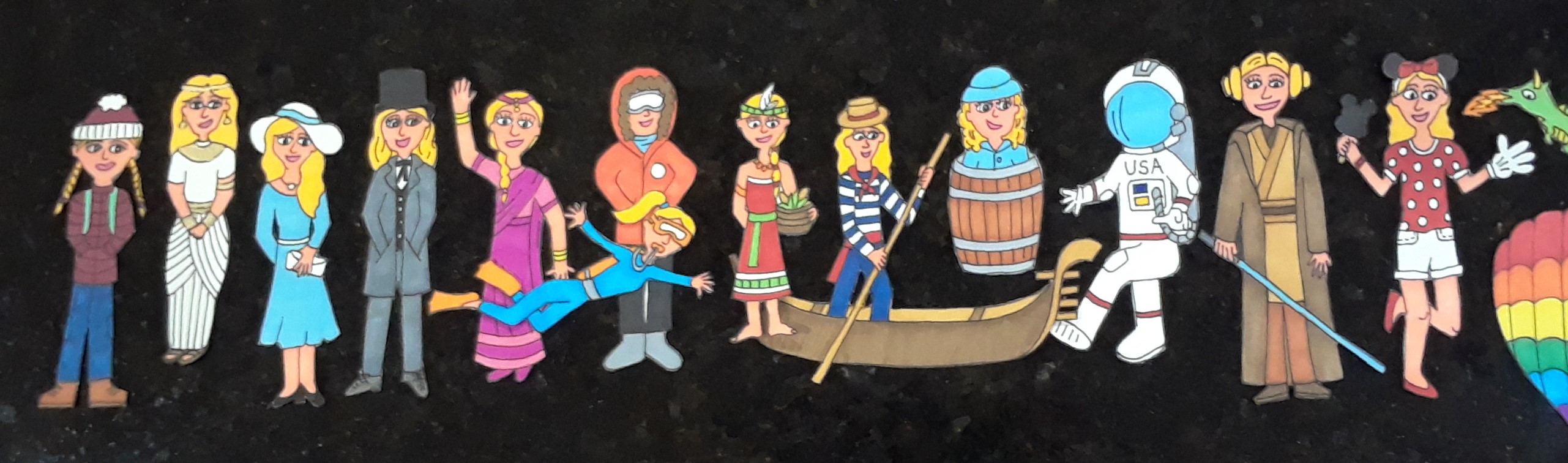
When the Covid pandemic began in mid-March, I felt lost. Other than providing a packet of independent work per district directive, I didn’t know what else to do. I really wanted to support my third graders during this uncertain time. So I got the idea of creating a stick-puppet show that delivered encouraging words and challenges. “Where in the World is Mrs. Foley?” was my adventure series and daily 2-4 minute videos were posted every school day — all 40 of them! Each time my character visited a new place around the world (and beyond). I share some facts about the location before the main lesson and challenge. While this project began as a service for my students, I felt it helped me stay productive. The element of creativity was a therapy I really needed. Check out my YouTube playlist of adventures.
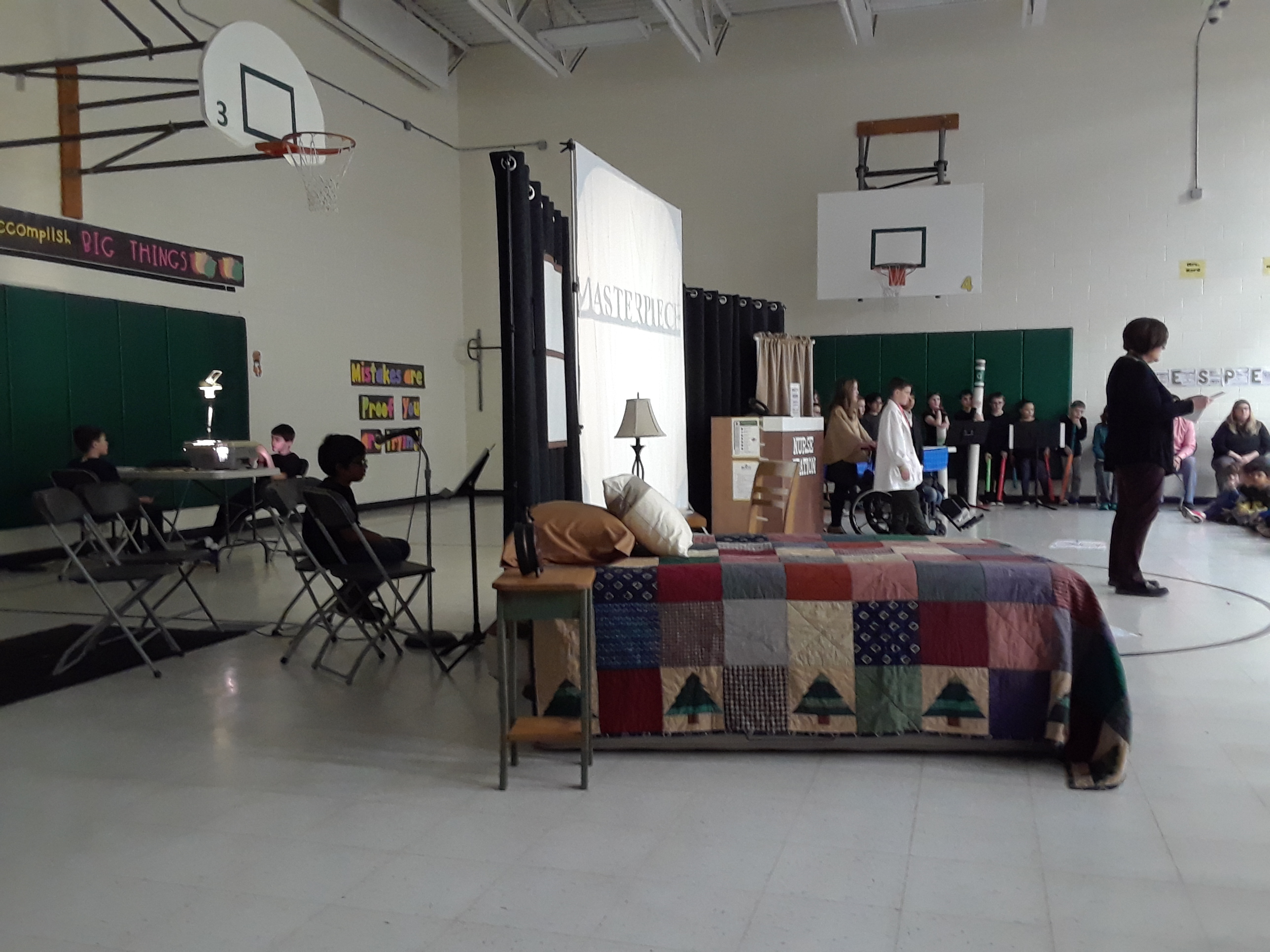
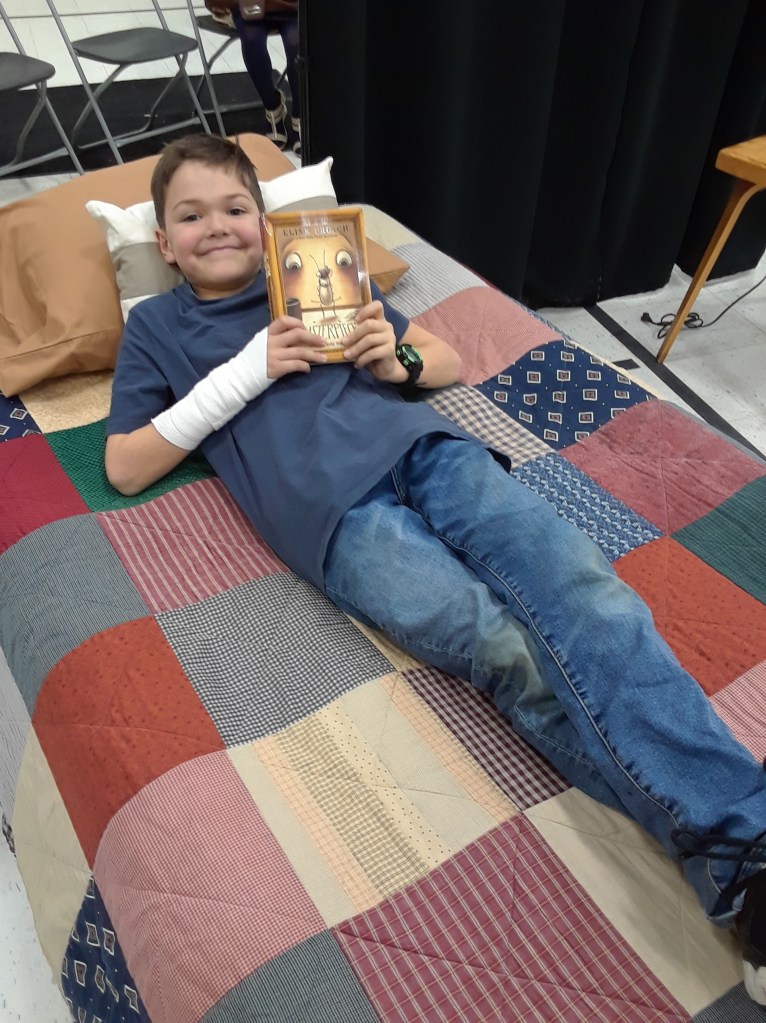
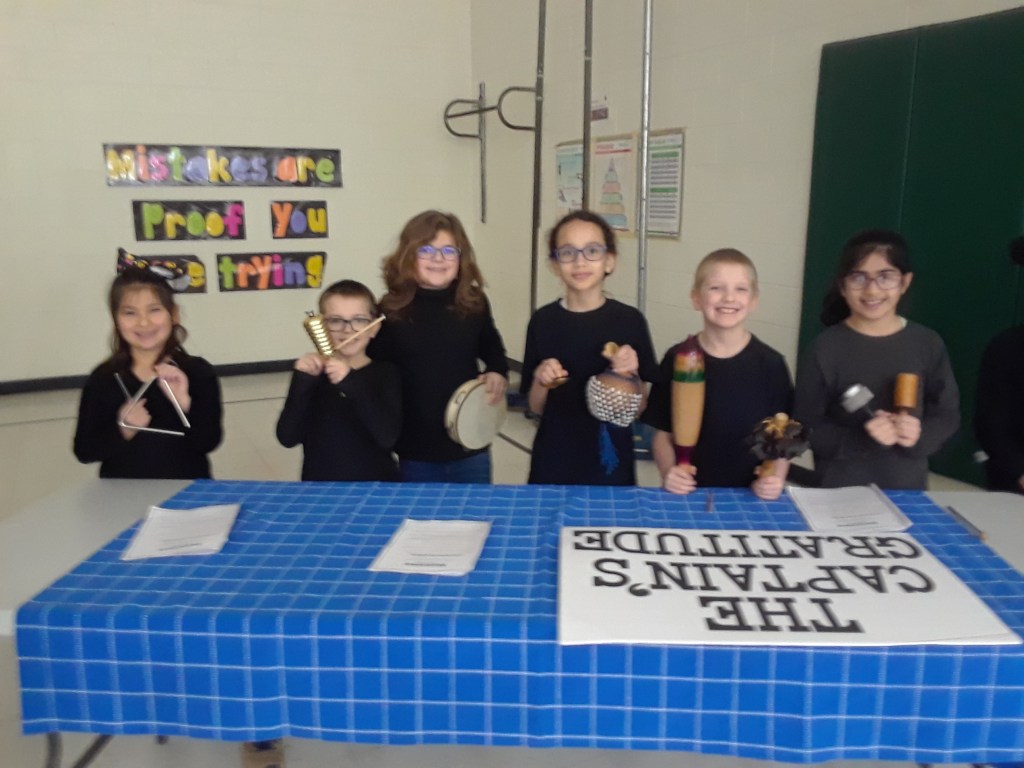
As our five-week whole-school novel study came to a close, we wanted to celebrate as a community. So again this year we orchestrated a readers’ theatre of the final chapters. My third graders continue to amaze me. And I really challenged them this time! Not only was there acting and instruments, I also added shadow puppetry! We had 3 narrators, 12 musicians, 3 puppeteers, and 7 actors. The addition of the black curtains and frames helped hide the puppeteers and voice actors who played the beetles. I was able to purchase those thanks to a Thrivent Action Teams grant. Oh, and the music teacher and I collaborated on an original song for Masterpiece! I wrote the lyrics and she set it to a melody. Listen to it here. (My 6th-grade daughter played it on her guitar.) The kids played and sang this chorus several times during the play. And since the music teacher taught it to all of her classes the week of our performance, the audience was able to sing along. Our first sing-along play! This was a readers’ theatre with lots of new elements. I absolutely LOVED the challenge and chance to be creative! Finally, every student was surprised with a gift–their very own sketchbook and felt-tip pen, like James in Masterpiece, though he had an ink set. That would have been a little to messy and expensive for all 480 students. Again, a big thanks to a Thrivent Action Teams grant for the purchase of the sketchbooks. What a thrill!
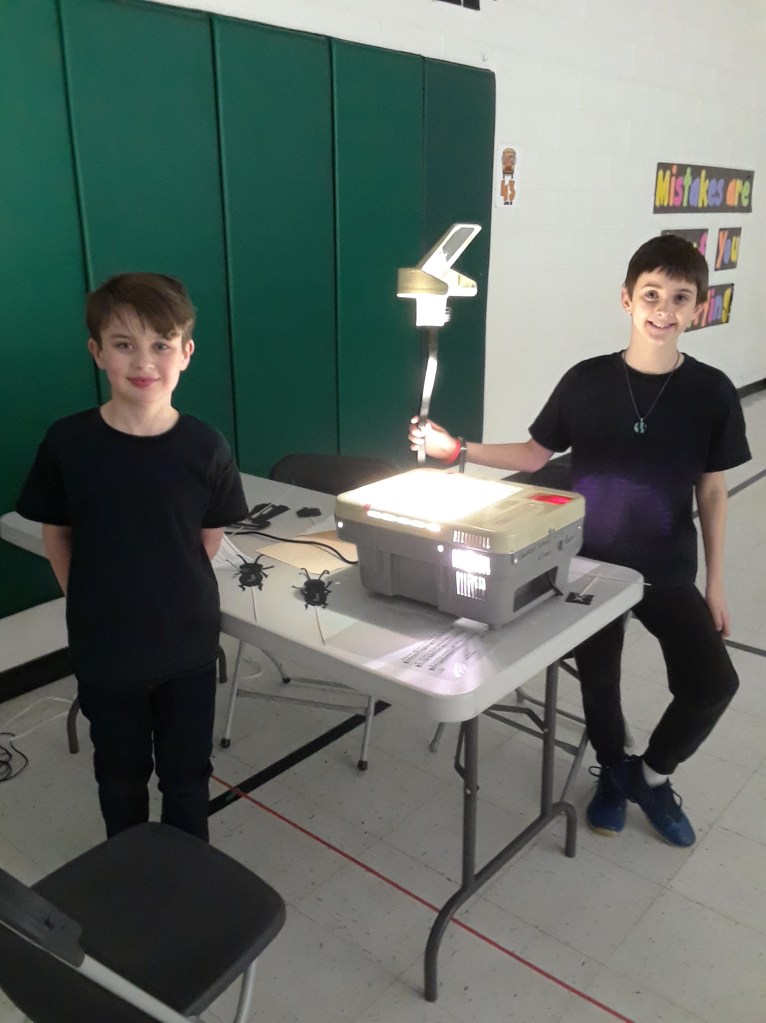
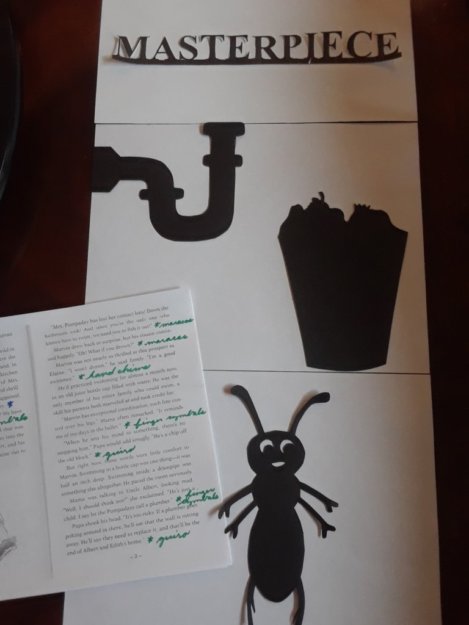
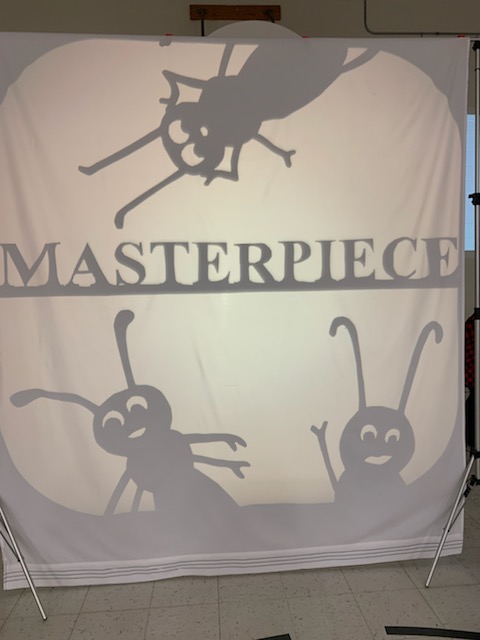
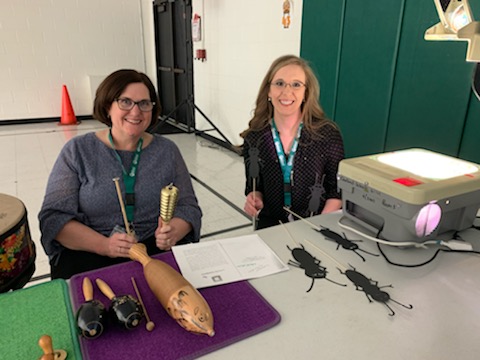
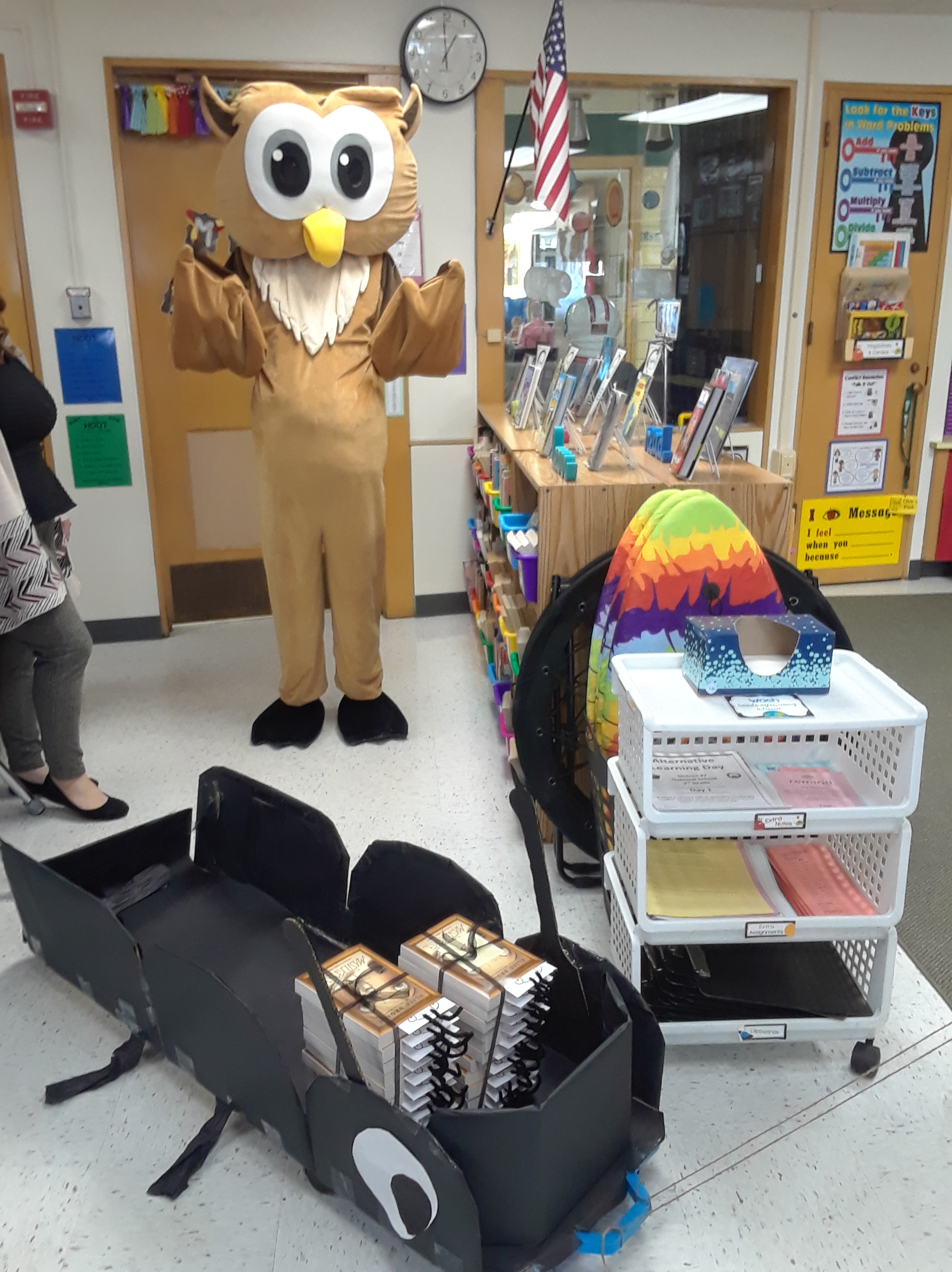
For the third year in a row, our students participated in an all-school novel study. This year’s title was Masterpiece by Elise Broach. For our opening assembly, the student body was introduced to the characters with a shadow puppet show. Yes! We amateurs pulled off a shadow puppet show of chapter 1 for 500 people. How did we do it? An old overhead projector, white sheet, greenscreen frame, and 2-D paper characters. And, of course, I had to add musical instrument sound effects! Another teacher and I hid behind the screen. I managed the puppets and she added the sounds–one for each character and others as needed. Other staff members joined in on the fun. Our librarian narrated the chapter and our art teacher painted an amazing owl (our mascot) in the style of Durer (the focus artist in the book). Following the assembly, Okie and a Marvin-style cart (the beetle in Masterpiece) made the rounds to each classroom to deliver a stack of novels, one for every student. Isn’t the teacher-created bookmark also adorable! Our team when all out again this year to get kids excited for the “One School, One Book” 5-week adventure.
So, I’ve wanted to do green screen projects with my students for awhile now. But managing it seemed impossible. Until I came up with what I thought was a smaller-scale activity. As it turns out, this adventure took just as much time and effort as a full-scale human actor green screen video. But we still had a blast! Let me share what I learned along the way.
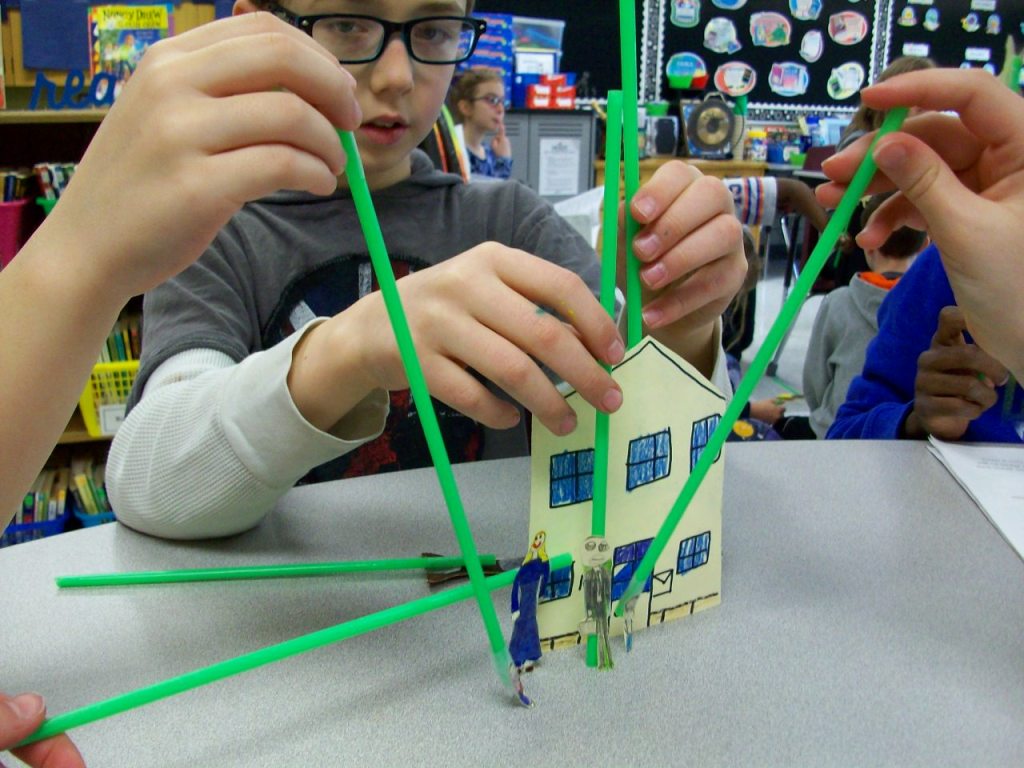
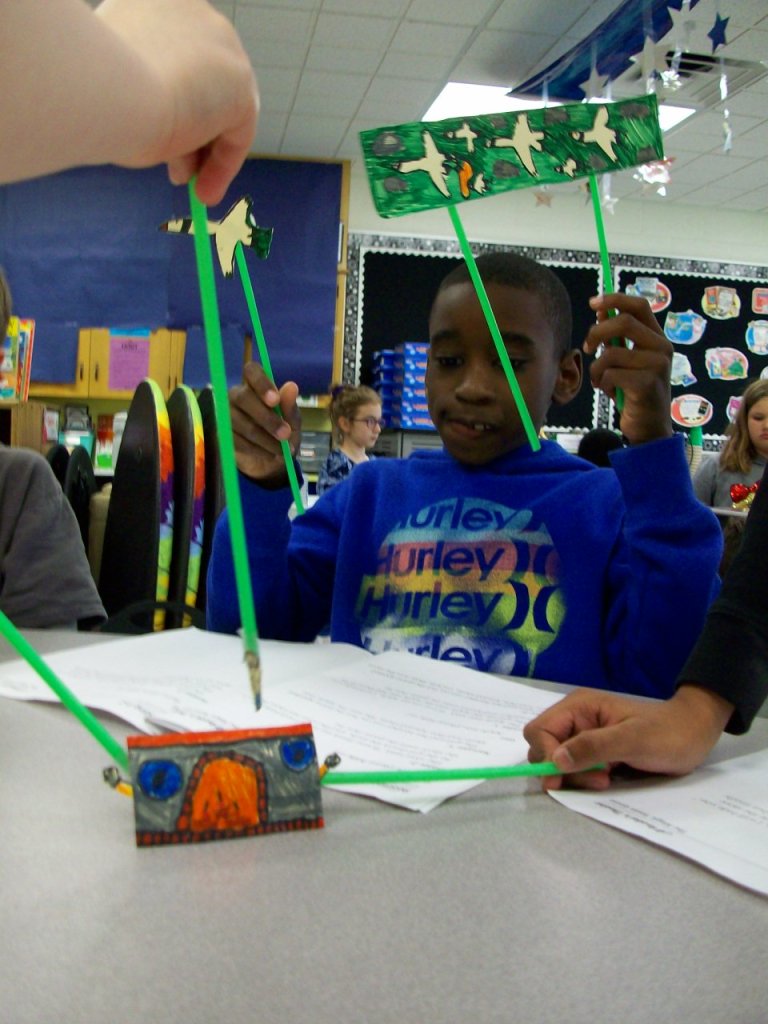
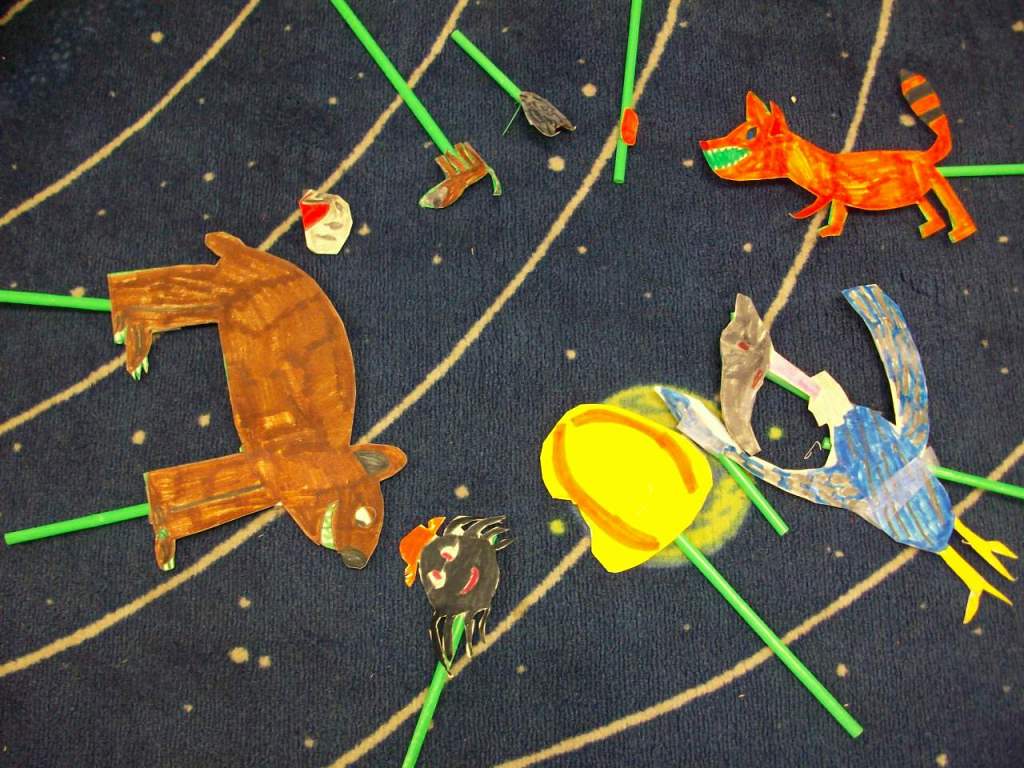
First, I do think stick puppets is the way to go over kids acting. It reduces pressure and self-consciousness. I found five folktale plays and began with groups reading independently for comprehension and then choosing parts and practicing fluency. Next, they created the puppet characters and props on a thick cardstock. TIP: Avoid green when coloring your puppets, because that part will take on the background image. If you really need green, use a different shade from your fabric. However, if you had small areas around an puppet that would be difficult to cut around, just use green and the background images should appear in that space. One of my groups were pure geniuses with this. They needed a flock of birds, but instead of making 6 individual birds, they colored green marker around the birds and cut them out as a big set. So clever! We attached green straws that matched the green background color. TIP: It’s easier to find different shades of green in fabric, so purchase your straws first, then bring one to the store and hold it up to each bolt of cloth. You’ll want them to be a very close match in order for the straws to disappear on screen.
Then the groups practiced fluency in conjunction with maneuvering the stick puppets. Since it was a small space, they had to work in close quarters. TIP: I stretched the fabric across a rolling clothes rack I typically use to hold pocket charts. Some students held puppets from either side and others reached over the top or came up from the bottom. I also let the teams pick their virtual backgrounds. We used free images from www.pixabay.com. A few groups only needed a single image for the story, but others required 2 or 3. Our district has Zoom video conferencing which has a recording option. That worked perfectly for inserting the virtual background and filming. TIP: A smooth fabric screen and good lighting is key to the virtual image looking crisp and the straws disappearing into the background. Any wrinkles in the greenscreen or an overcast day can negatively impact the quality. We often tightened the fabric and did all of our recording near our wall of classroom windows.
While one group was filming, the others had independent reading time. We had to have absolutely silence since the Zoom recording was able to pick up a lot of background sound. Some students enjoyed watching the other groups rather than reading, and I was fine with that. When all teams finished, we had a whole-class screening and shared compliments with each group. It was certainly a learning process for me, but I feel the students learned a lot about what goes into a production. For some of them, this might have been their first experience with performing arts or this kind of technology. And perhaps it opened a new door for those who most enjoyed it.





 Kristen Foley